
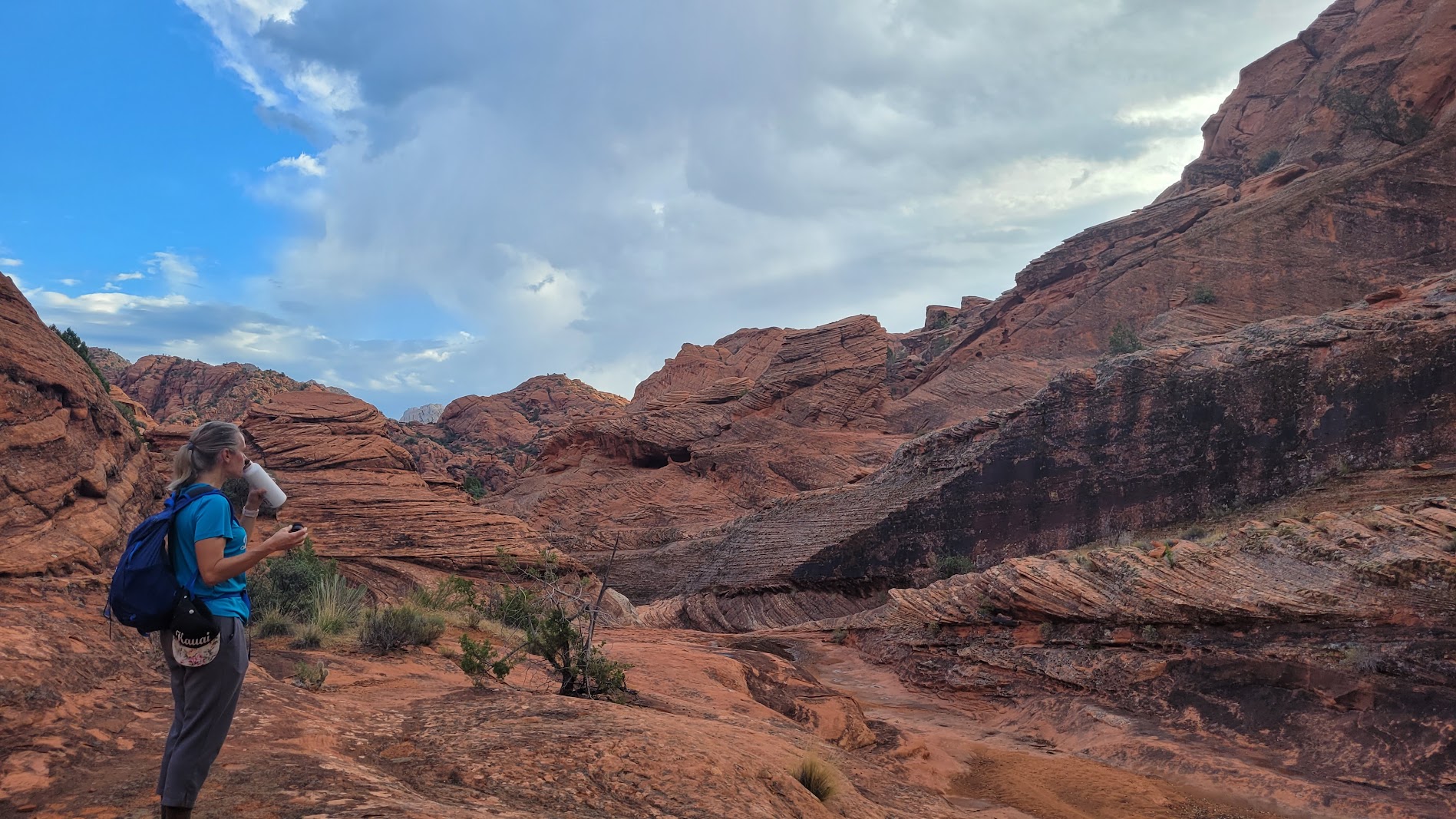
There’s a simple rule most experienced desert hikers follow, and it’s a good place to start: in moderate conditions, plan on about half a liter of water per hour. Once the heat turns up, that number jumps to a full liter per hour. It sounds like a lot—until you actually need it. And you will.
Here’s the baseline you should follow:
- 0.5 liters per hour in moderate desert conditions (60s–70s°F)
- 1 liter per hour in hot conditions (80s°F and above)
- Add extra water for route mistakes, delays, or emergencies
- Increase intake for exposed terrain with no shade
The rule is simple: carry more than you think you’ll need—because sometimes everything that could go wrong WILL go wrong.
Desert Hydration Basics: How Much Water You Actually Need
The desert has a way of humbling people who try to cut it too close. I learned that the hard way on what should have been an easy outing. The forecast called for high 60s to low 70s, and I was only planning a quick couple-mile hike. I tossed a 24-ounce bottle in my pack and figured I was covered. No big deal.
Except it didn’t go that way.
The temperature climbed into the mid-80s, and to make things more interesting, we started from the wrong trailhead. What was supposed to be a short, canyoneering adventure turned into a 10-mile grind. By the end of it, that “plenty of water” I brought was nowhere close to enough. It was one of those moments where everything stacks against you at once. I was hot. I was light-headed. And, honestly, I got a little worried around mile 6 – and rightly so.
That experience drove home a simple truth: you don’t plan for the hike you expect—you plan for the one that goes sideways. Because sometimes it will.
Another time, the stakes were even higher. I was on a multi-day backpacking trip with a few inexperienced hikers, and I had been very clear in the weeks leading up to it: you need to carry enough water, and you need reliable containers. I told them to bring at least two 32-ounce bottles and keep them full.
At the end of the first day, I checked in to make sure everyone was topped off before we pushed on. One guy casually said, “My water bottle broke, so I don’t have any water left.”
He had shown up for a 50-mile backpacking trip with nothing more than a cheap 12-ounce disposable bottle. That was it. No backup. No redundancy. No margin for error. When it failed—as those bottles eventually do—he had nothing. From that point on, it wasn’t just his problem. It became everyone’s problem. We had to share water, which put the entire group at risk. What should have been a challenging but manageable trip turned into something far more stressful.
The lesson there is just as important as how much water you bring: what you carry it in matters just as much. Gear failure in the desert isn’t an inconvenience—it’s a liability.
Even experienced hikers aren’t immune. I’ve had hydration packs leak inside my backpack without realizing it until everything was soaked and I’d already lost a significant amount of water. That’s the kind of mistake you only make once before you start taking your gear a lot more seriously.
Best Ways to Carry Water on a Desert Hike: Bottles vs. Hydration Packs
When it comes to carrying water, you’ve got a couple of solid options. Traditional bottles are simple and dependable. Insulated bottles like those from Hydro Flask or YETI are popular, but you don’t need to spend a ton of money. The real requirement is that your bottle doesn’t leak, doesn’t break, and can handle getting knocked around in your pack.
Hydration systems are another great option, especially for longer hikes or anything more active like backpacking or mountain biking. Brands like CamelBak and Hydrapak make it easier to drink consistently without stopping, which can make a bigger difference than most people realize. If water is easy to access, you’re far more likely to stay ahead of dehydration instead of reacting to it.
Electrolytes vs. Plain Water: What Should You Drink?
Then there’s the question of what you should actually be drinking. Some people swear by plain water, and there’s nothing wrong with that. It works. It’s simple. It gets the job done.
But for me, I lean toward electrolyte mixes. Options like Liquid I.V. or Nuun not only help replace what you’re losing through sweat, they also make the water taste better. And that matters more than people like to admit. If you don’t enjoy drinking plain water, you’re going to drink less of it. Anything that encourages you to hydrate more consistently is a net positive.
When it Comes to Hydration, Learn What Your Body Requires
At the end of the day, the exact amount of water you need will become more personal with experience. You’ll figure out how your body handles heat, how much you sweat, and how to adjust based on the conditions. But that kind of intuition takes time to develop.
Until then, keep it simple. Start with half a liter per hour in moderate weather, and a full liter per hour when it’s hot. Then add extra. Always add extra.
Because the desert doesn’t care what your plan was. It only cares whether you brought enough water to handle what actually happens.
Final Takeaway: Don’t Gamble With Water in the Desert
At the end of the day, your hydration strategy doesn’t need to be complicated—but it does need to be intentional.
- Start with 0.5L/hour in moderate weather
- Increase to 1L/hour in high heat
- Carry extra water for unexpected situations
- Use reliable containers that won’t fail you
- Drink consistently, not just when you feel thirsty
Experience will teach you what your body needs over time. But until you’ve built that instinct, play it safe. Because the desert doesn’t care what your plan was. It only cares whether you brought enough water to handle what actually happens.
 That Outdoor Site
Leave a comment