
Our Trail Rating
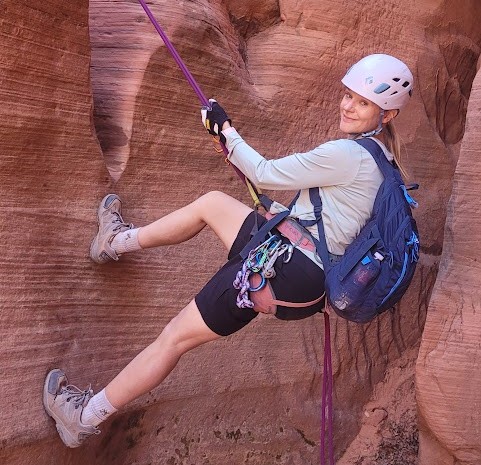
There’s something about slot canyons in southern Utah that never really gets old. Maybe it’s the way the light filters down through impossibly narrow walls, or how the sandstone seems to glow in shades of red, orange, and white. Or maybe it’s just that feeling of stepping into a place that doesn’t quite feel like Earth anymore.
Diana’s Throne is the quintessential Utah slot canyon.
Tucked away on the east side of Zion National Park, not far from Coral Pink Sand Dunes, this short canyoneering route delivers that classic Utah slot canyon experience—without demanding a high level of technical skill. It’s scenic, accessible, and just challenging enough to keep things interesting.
But is it actually worth your time?
What Is Diana’s Throne Canyoneering Route?
Diana’s Throne—also known as Elkheart Cliffs Slot Canyon—is a short, technical canyoneering route that winds its way through a narrow sandstone drainage. It’s the kind of canyon people picture when they think of southern Utah: tight corridors, smooth sculpted walls, and slices of blue sky far overhead.
Location and Access
Diana’s Throne sits about an hour and forty-five minutes from St. George, Utah, on the east side of Zion National Park. Access is relatively straightforward, with the route located not far off Highway 89.
One of the nice things about this canyon is how easy it is to fit into a broader southern Utah trip. You’re within striking distance of Zion, and just minutes from Coral Pink Sand Dunes State Park, which makes this a solid add-on if you’re already exploring the area.
That said, the biggest challenge isn’t getting there—it’s getting to the right place. The trailhead confusion is real, and it’s worth double-checking your navigation before you commit.
What to Expect in the Canyon
From the moment you drop in, Diana’s Throne delivers exactly what you’d hope for.
The canyon narrows quickly into a winding sandstone corridor, with smooth, sculpted walls rising high above. The colors shift constantly depending on the light—deep reds in the shadows, bright oranges where the sun hits, and pale whites streaked through the rock.
It feels remote, quiet, and just a little bit other-worldly.
Rappelling Experience
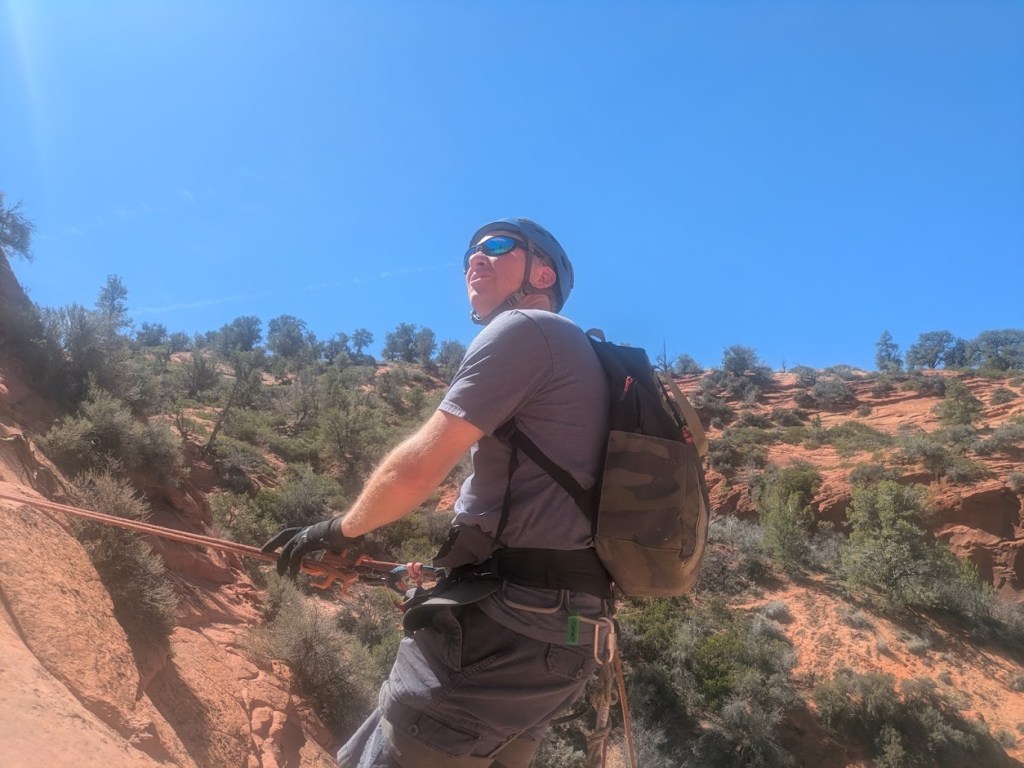
The technical side of the route is where Diana’s Throne earns its reputation as a beginner-friendly canyon.
You’ll find a handful of rappels—nine of them to be exact. Those who feel comfortable can skip some of the raps and downclimb them instead. I would say FIVE of them must be rappelled, and they range in length from fifteen to 85-feet. None of them are especially complicated, and all of the anchors are bolted.
On our trip, every bolt we encountered was in excellent condition, which added a layer of confidence, especially for newer canyoners.
This isn’t a place where you’ll be solving complex rigging problems or navigating tricky downclimbs. It’s straightforward, controlled, and—most importantly—fun.
Difficulty Level – Is It Good for Beginners?
Short answer: yes.
Diana’s Throne is widely considered one of the better introductory canyons in southern Utah, and it’s easy to see why. The rappels are manageable, the route is intuitive, and the overall commitment level is relatively low.
For someone just getting into canyoneering or looking to build confidence on rope, this is a solid choice.
That said, if you’re an intermediate or advanced canyoner, you may find it a bit underwhelming from a technical standpoint. It’s not designed to push your limits—it’s designed to be approachable.
Is Diana’s Throne Worth It? (An Honest Take)
Diana’s Throne is a fun canyon. It’s scenic, easy to access, and doesn’t require a ton of planning or research. If you’re already in the area—exploring Zion, driving Highway 89, or visiting Coral Pink Sand Dunes—it’s absolutely worth considering.
But is it a destination canyon?
Probably not.
If you’re going out of your way specifically for a canyoneering objective and you have some experience under your belt, there are more challenging and rewarding routes in southern Utah.
On the other hand, if you’re looking for a low-stress adventure, or you just want to run a canyon for the fun of it, Diana’s Throne delivers exactly what you need.
Combining Diana’s Throne with a Nearby Canyon
One of the more interesting aspects of this route is how easily it pairs with another short canyon nearby—often referred to as The Huntress (sometimes called “The Hunted”).
As you exit the final rappel of Diana’s Throne, you can actually see the trail heading up toward this adjacent canyon. Because they share the same exit, many people choose to combine the two into a single outing.
We had planned to do exactly that, but ran out of time. In hindsight, combining both routes would have made for a more complete day, especially if you’re looking to get a bit more mileage out of the trip.
Important Tips Before You Go
A few things are worth keeping in mind before heading out.
First—and it’s worth repeating—make sure you have the correct trailhead dialed in. The hiking route and the canyoneering route are not interchangeable, and ending up at the wrong one will throw off your entire plan.
Second, even though this is a beginner-friendly canyon, it’s still a slot canyon. That means paying attention to weather conditions and avoiding the route during any chance of rain due to flash flood risk. The good thing about this canyon is there are exit opportunities throughout the canyon. So, if a thunderstorm erupts, or you start to see water flowing at your feet, you can get out quickly!
Also be sure you have enough water. We did the canyon in March when temperatures were in the low 80’s. We certainly wish we would have carried more water with us, as trudging through the deep, soft sand takes its toll.
Finally, don’t let the shorter length fool you. It’s easy to underestimate how long transitions, rappels, and navigation can take, especially with a group.
Best Time to Visit
Like most canyons in southern Utah, Diana’s Throne is best enjoyed in the spring and fall when temperatures are more moderate.
Summer can bring intense heat, especially in exposed sections before and after the canyon, while winter conditions can vary depending on recent weather.
Lighting also plays a big role here. Midday tends to bring out the brightest colors inside the canyon, making it an ideal time if you’re hoping to capture that classic Utah glow.
Nearby Attractions
One of the biggest advantages of Diana’s Throne is its location.
You’re just a short drive from Zion National Park, one of the most iconic outdoor destinations in the country. Coral Pink Sand Dunes State Park is even closer, offering a completely different landscape of rolling sand hills that feel worlds apart from the canyon.
If you’re building out a southern Utah itinerary, this area gives you plenty to work with.
Final Thoughts
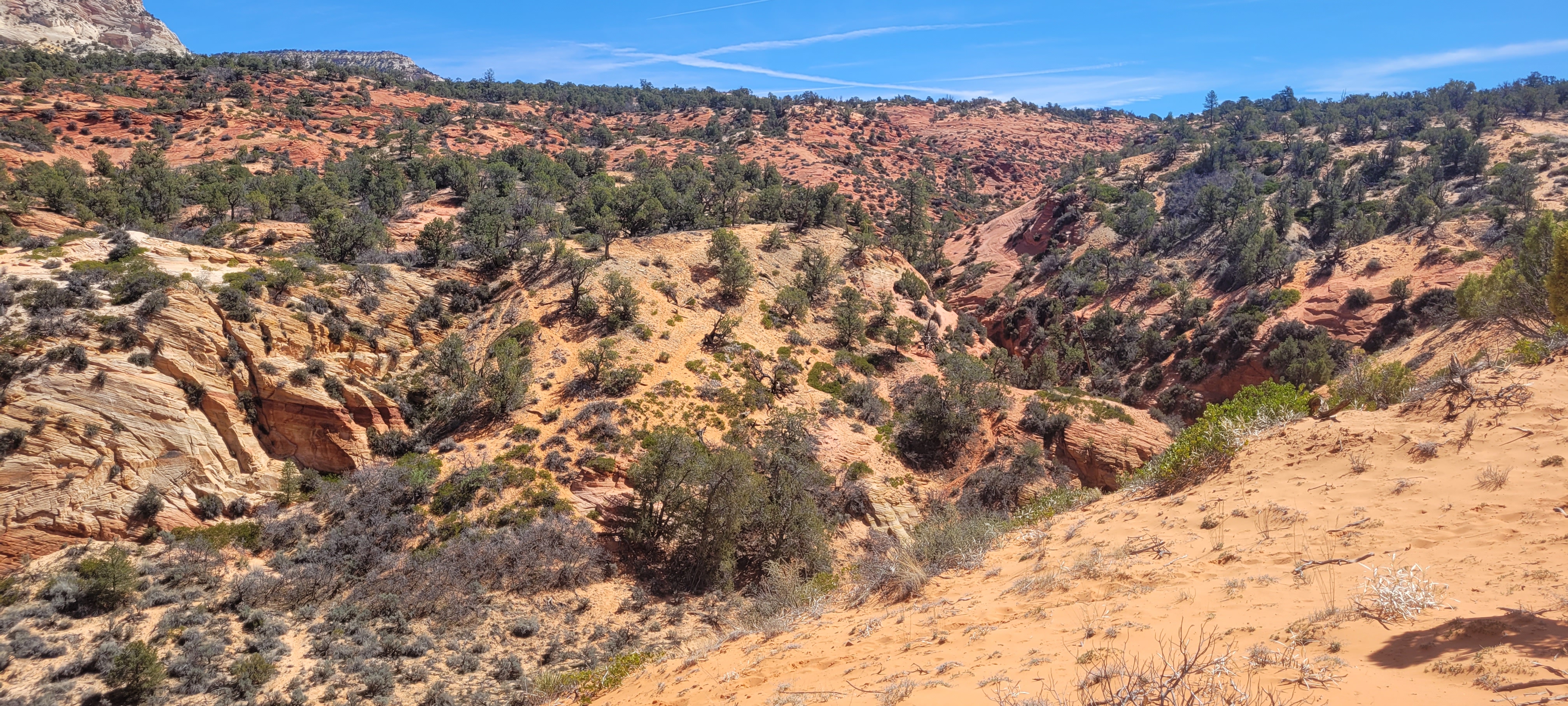
Diana’s Throne isn’t the most challenging canyon in Utah, and it doesn’t try to be.
What it offers instead is a straightforward, scenic, and genuinely enjoyable canyoneering experience. It’s the kind of route you run when you want to get on rope without overcomplicating things—when the goal is simply to be out there, moving through stone and light.
If you’re new to rappelling, it’s a great place to start. If you’re experienced, it might not blow you away—but it can still be a worthwhile stop if you’re already in the area.
Sometimes, that’s enough.
FAQ
How long does Diana’s Throne take?
Most groups complete the route in 1.5 to 3.5 hours, depending on experience level, group size, and how fast you choose to go.
How many rappels are in Diana’s Throne?
Typically, there are around 4 to 5 rappels, all of which are relatively short and beginner-friendly. You can do more if you choose not to downclimb some of the shorter rappels.
Is Diana’s Throne safe for beginners?
Yes, it’s considered a good introductory canyon, provided you have proper gear and basic rappelling knowledge.
Do you need a permit for Diana’s Throne?
Permits are not required.
What’s the difference between the hike and the canyoneering route?
The hike leads to a scenic viewpoint, while the canyoneering route involves descending into the slot canyon using rappels. They start from different trailheads and are not the same experience.
 That Outdoor Site
Leave a comment