
Our Trail Rating
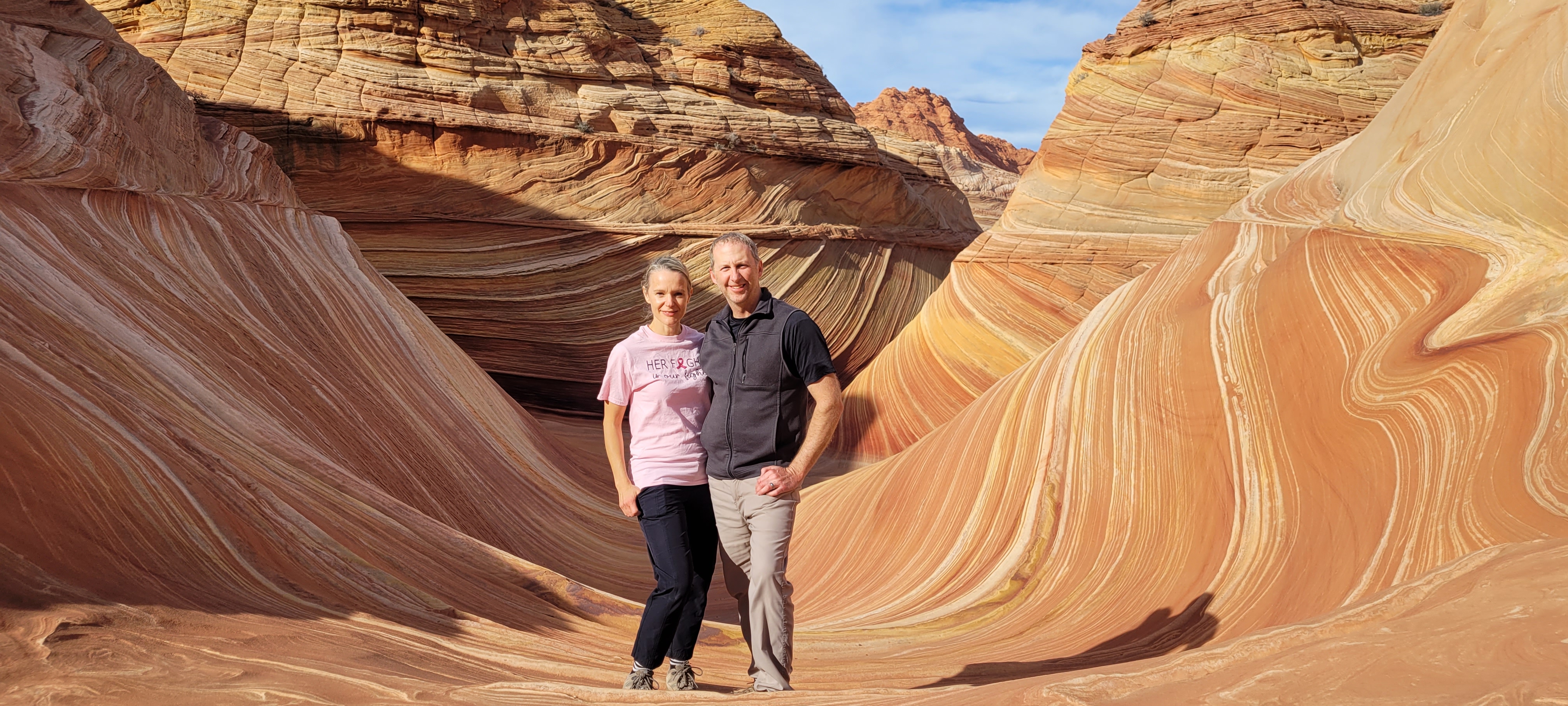
After YEARS of entering the lottery for The Wave hike in Arizona, we finally got lucky. A friend scored a permit through the highly competitive lottery system. And just like that, after five years of rolling the dice with the BLM, we headed to one of the most iconic hikes in the Southwest.
Located in the breathtaking Paria Canyon-Vermilion Cliffs Wilderness along the Utah–Arizona border, The Wave sits inside Coyote Buttes North — a protected desert landscape famous for its swirling sandstone formations.
If you’ve been wondering how to hike The Wave, how hard The Wave hike is, or whether it’s worth the permit process, here’s our experience — including the alternative route we took.
Why Winter Is the Best Time to Hike The Wave
We did The Wave hike at the end of December, and I can confidently say: winter is the best time to hike The Wave.
The weather was PERFECT. Cool air. Clear skies. No scorching sun beating down on exposed slickrock.
If you’re researching the best time to hike The Wave in Arizona, fall, winter, and early spring are ideal. Summer temperatures in Coyote Buttes North can easily exceed 100°F, making the hike far more difficult — and potentially dangerous — due to the lack of shade and water sources.
If you can choose your season, go cooler. Your body will thank you.
How Hard Is The Wave Hike?
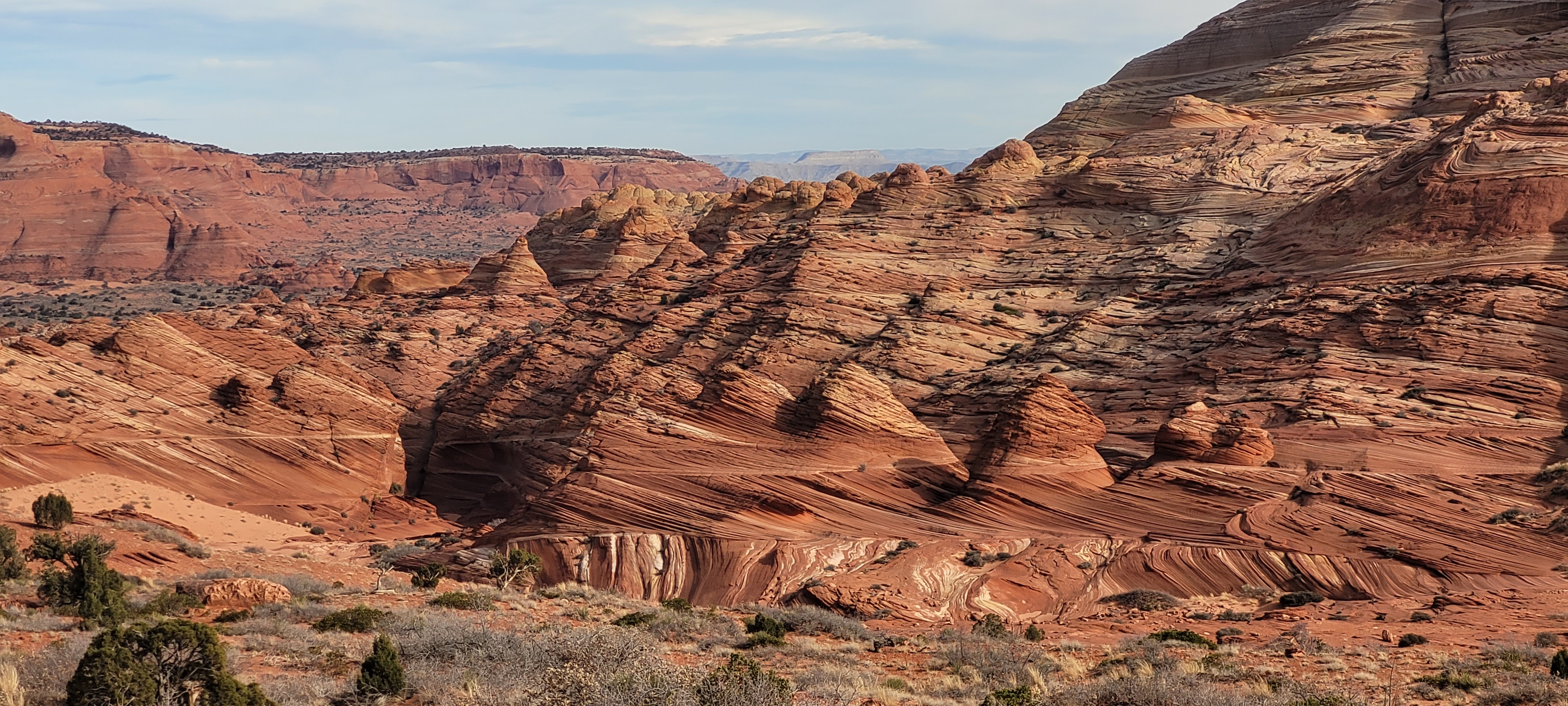
Let’s talk honestly about difficulty.
The Wave hike is typically around 6–7 miles round trip, depending on your route. But distance isn’t what makes it moderately difficult — it’s the navigation. There is no clearly marked trail for much of the hike.
You’ll cross sandy washes, hike over slickrock, and rely on landmarks, maps, or GPS to find your way. If you’re asking, “How long does The Wave hike take?” — plan on 4 to 6 hours, depending on your pace and how many breaks you take for snacks and photos.
And trust me… you’ll want photo breaks.
Also important: that timeframe doesn’t include drive time to the trailhead. Start early.
The Wave Permit Process: Is It Worth It?
To hike The Wave, you must win a permit through the lottery system administered by the Bureau of Land Management. Permits are limited daily to protect the fragile sandstone formations from overuse. It’s competitive — and it can take years to win.
There are two ways to score a permit: the OPEN LOTTERY, and the DAILY LOTTERY. When you apply via the OPEN lottery, you’re applying to hike four months in advance of the month in which you’re applying. That means if you’re applying in March, you’re saying you’re willing to hike in July. Only 48 people per day are chosen through this method.
The other lottery is a DAILY lottery. Through this process, the BLM chooses up to 16 people who apply for a permit while they are in what they call a “geofence” two days before the desired hike date. Basically, you have to be in the area of Page, AZ, or in Utah in the area of Kanab or Orderville. A total of 16 people per day are selected through this method, meaning only 64 people are allowed to hike The Wave on any given day.
With all that said, was it worth the hassle and the wait? Absolutely!
Even with permit limits in place, you WILL run into other hikers. That’s just the reality of hiking one of the most famous geological formations in the country. But the controlled numbers keep it from feeling overwhelming. And choosing a less common route? That helped even more.
Taking the Less Crowded Route: Via Notch Arc
Most people begin The Wave hike from the Wire Pass Trailhead. That’s the standard route. You start from Kanab, UT, turn right on House Rock Rd., and go about 8.5 miles to the Wire Pass Trailhead. The road is rough, but not impassable. Standard crossover SUV’s and pickups can navigate the road without a problem, provided the weather is dry. If the road is wet, stay away. Even a four-wheel-drive truck will have problems navigating the slippery conditions and rutted roads. Be smart and check conditions before you commit.
The standard route is to start at the Wire Pass trailhead. But we did something different.
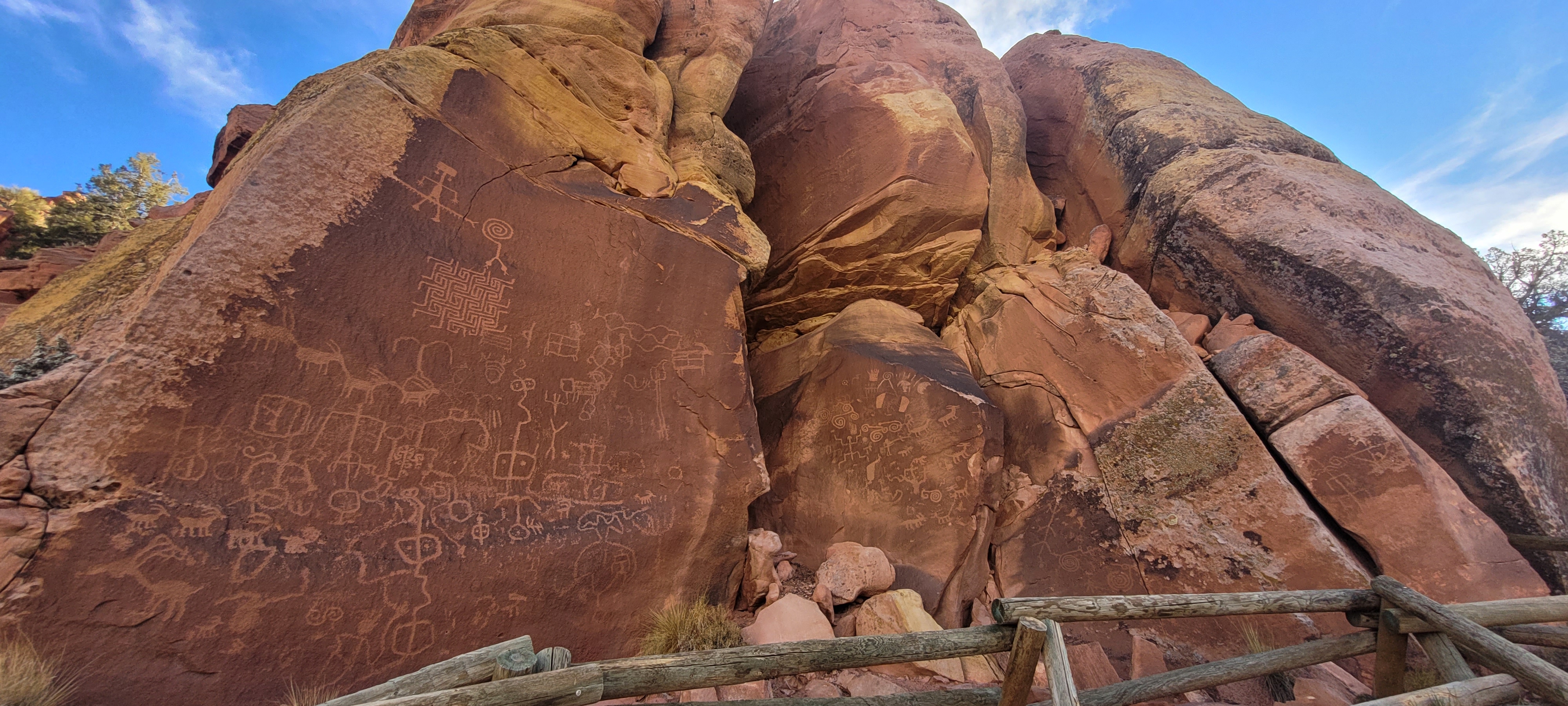
On the advice of a BLM volunteer, we entered through The Maze — an adventurous sandstone area that doesn’t require a Wave permit by itself. The trailhead to this site – which features a prominent Native American rock art panel – is about two miles beyond Wire Pass. And it’s much less crowded.
After exploring the Maze Rock Art site, we doubled back and connected with the Notch Trail, climbing up the slickrock terrain toward Notch Arch. This route to The Wave is unique, and it definitely requires a little skill. Only hikers with good route-finding abilities should attempt this route, as the path isn’t marked – at all. And it’s not easy.
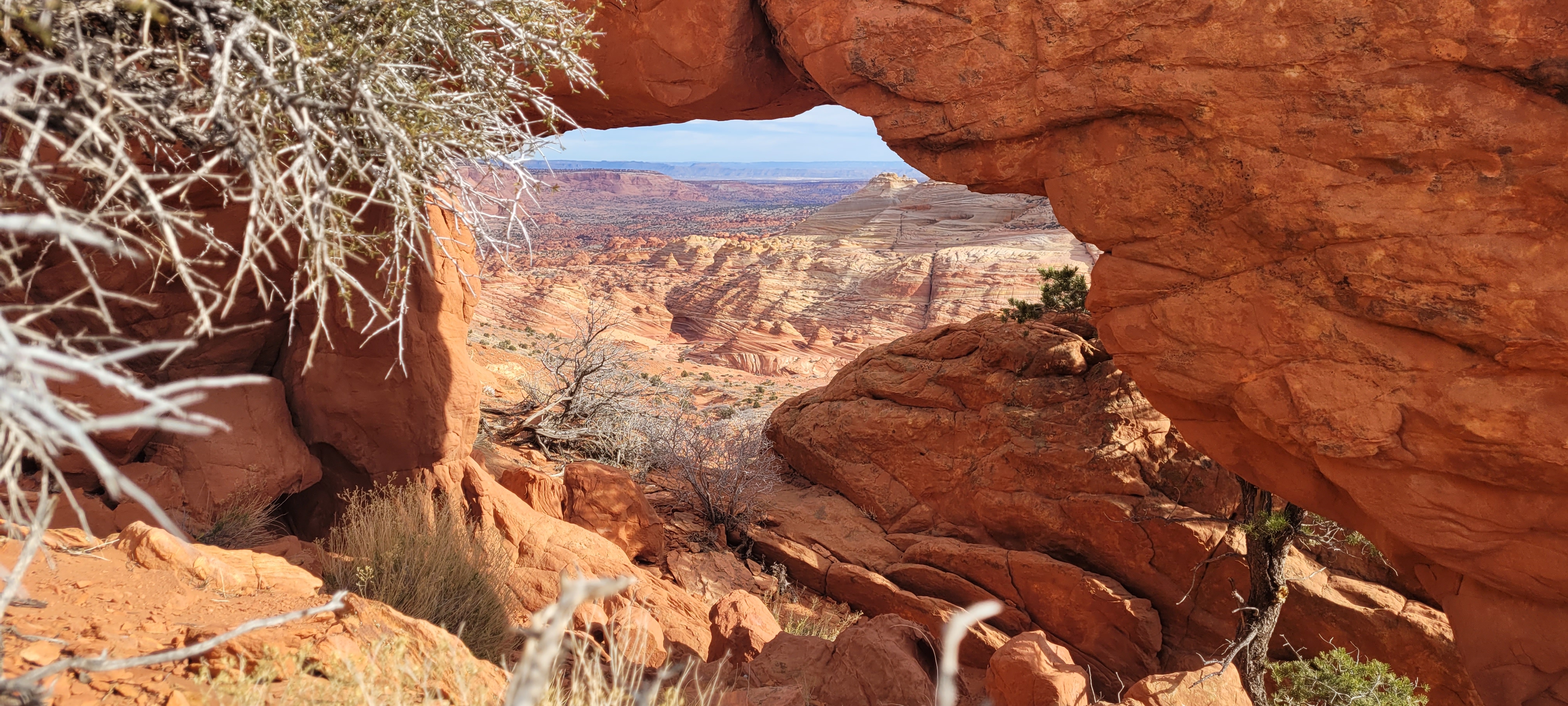
Finding Notch Arch isn’t easy either. But once you’re there, the view is unreal! You can see across the entire Coyote Buttes North area — waves of red rock stretching endlessly into the distance. It’s quiet, expansive, and absolutely stunning.
The Descent: Sand Cove, The Swirls & Route-Finding Skills
From Notch Arch, it’s a steep descent down into Sand Cove, then onward to The Swirls, and eventually to The Wave — famous for its swirling sandstone formation that looks like it was painted into the desert.
This route is more strenuous than the traditional approach.
It requires:
- Strong route-finding skills
- A physical map
- Offline GPS
- Confidence hiking in remote desert terrain
- Water – plenty of it. Even in winter.
If you don’t have experience hiking in wilderness areas, I highly recommend going with someone who does — or hiring an experienced guide. The terrain is beautiful but unforgiving. Slickrock slopes, sandy sections, and navigation challenges make preparation essential.
But this route also means fewer people for much of the hike — one of the main reasons we chose it.
Wildlife & Otherworldly Beauty
We took our time.
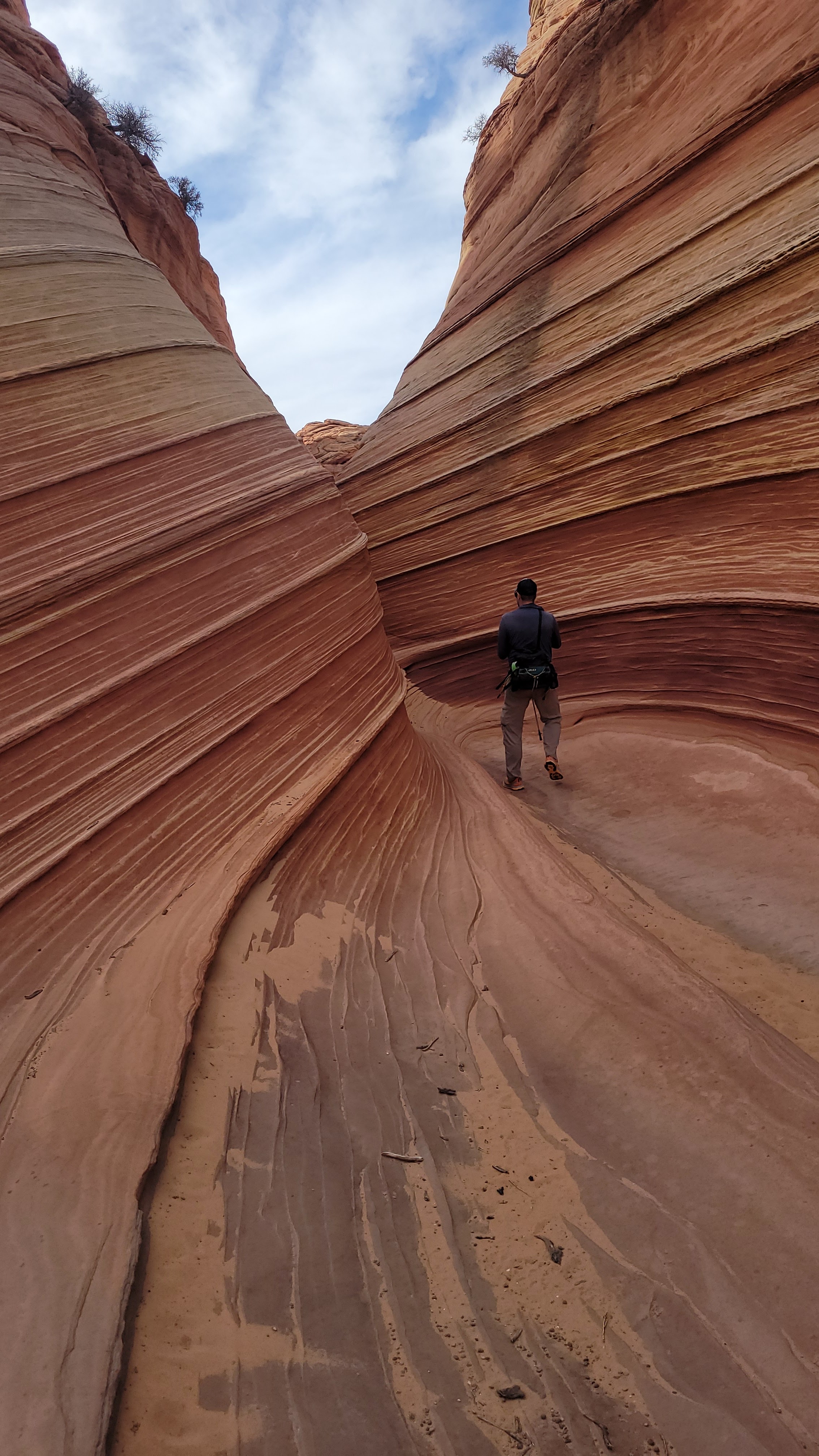
There’s no rushing through Coyote Buttes North. The rock formations are otherworldly — flowing stripes of red, orange, and cream carved by wind and water over millions of years.
At one point, we spotted a small herd of bighorn sheep moving gracefully across the cliffs. Seeing wildlife in that vast desert setting made the experience even more special.
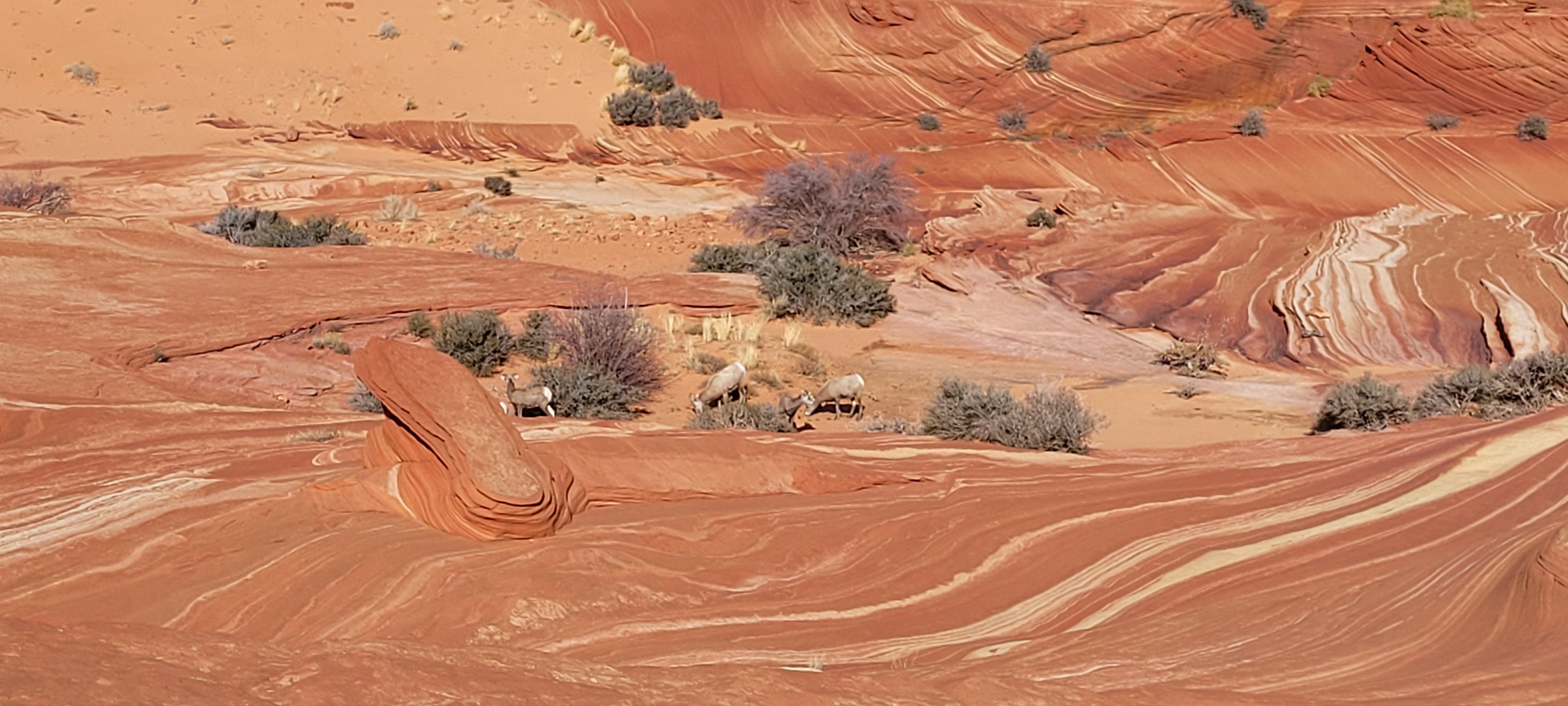
It’s not just about reaching The Wave — it’s about the entire landscape. Some people are so excited to see The Wave, that they forget everything else. There are TONS of fascinating geological features along the way – so many there’s no way to see all of them in one day. So, take your time!
We Finally Reached The Wave
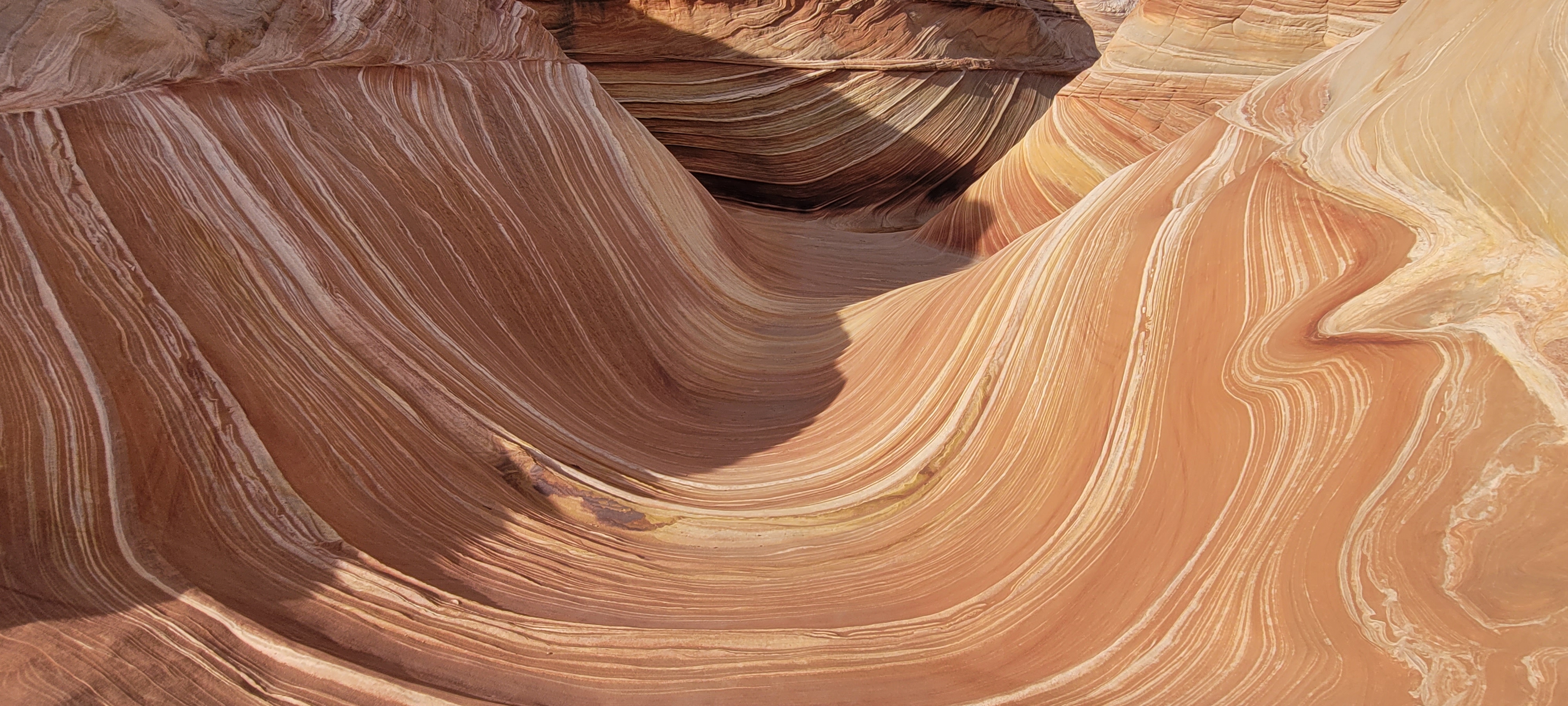
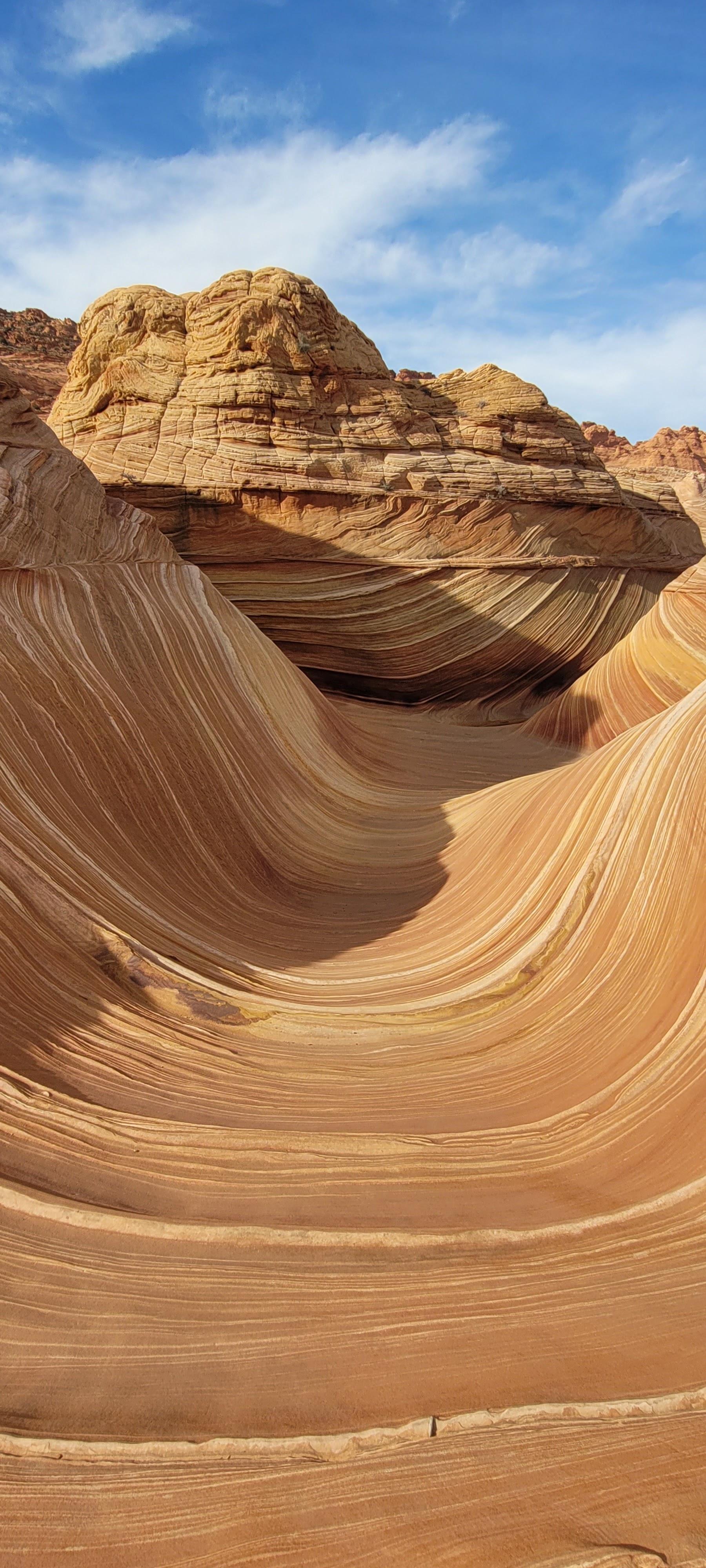
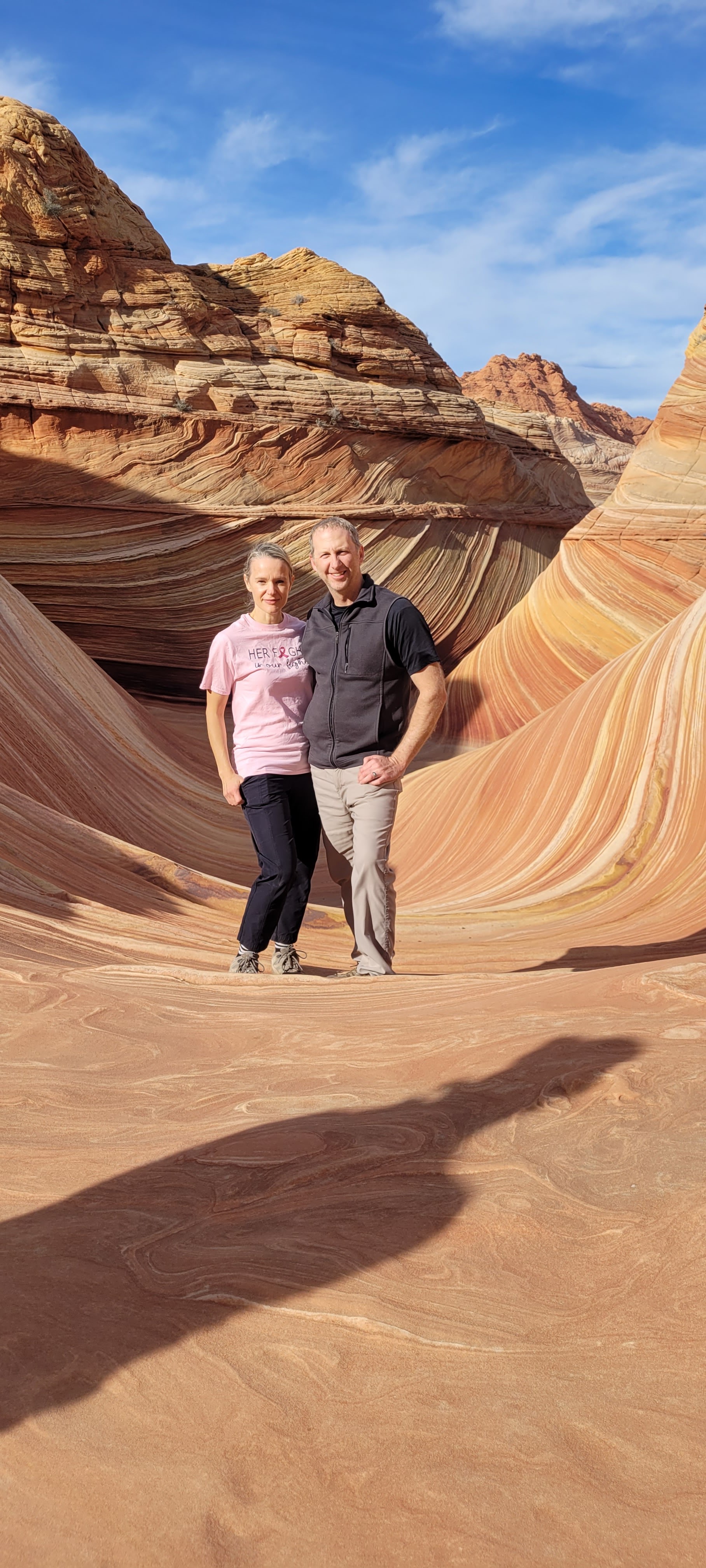
After winding through Sand Cove and The Swirls, we eventually reached The Wave.
And yes — its beauty IS, indeed, all it’s cracked up to be!
The swirling sandstone formation is completely unique. Standing inside it feels surreal. The curves seem to flow like frozen waves, and the colors shift as the sun moves across the sky.
If you’re wondering, “Is The Wave hike worth it?” — the answer is 100% yes.
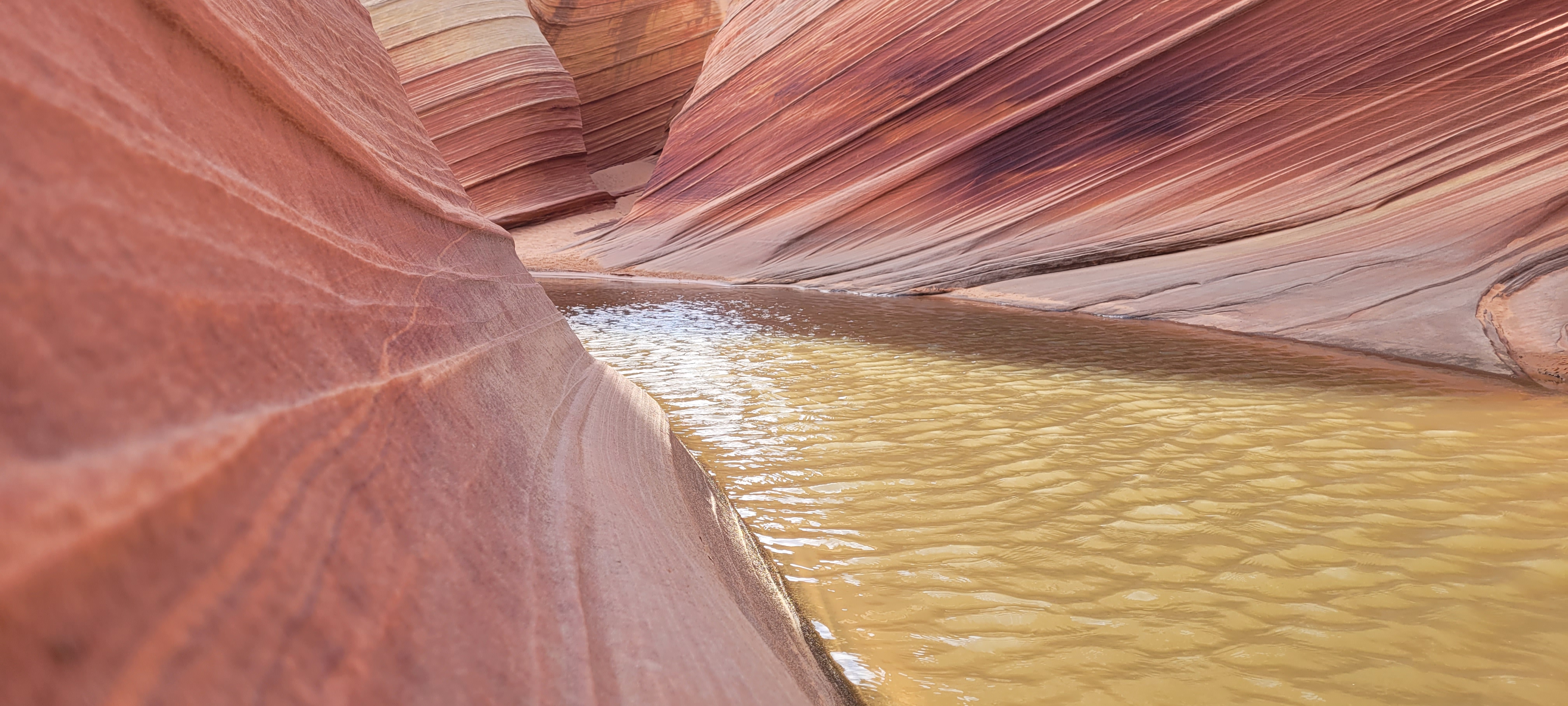
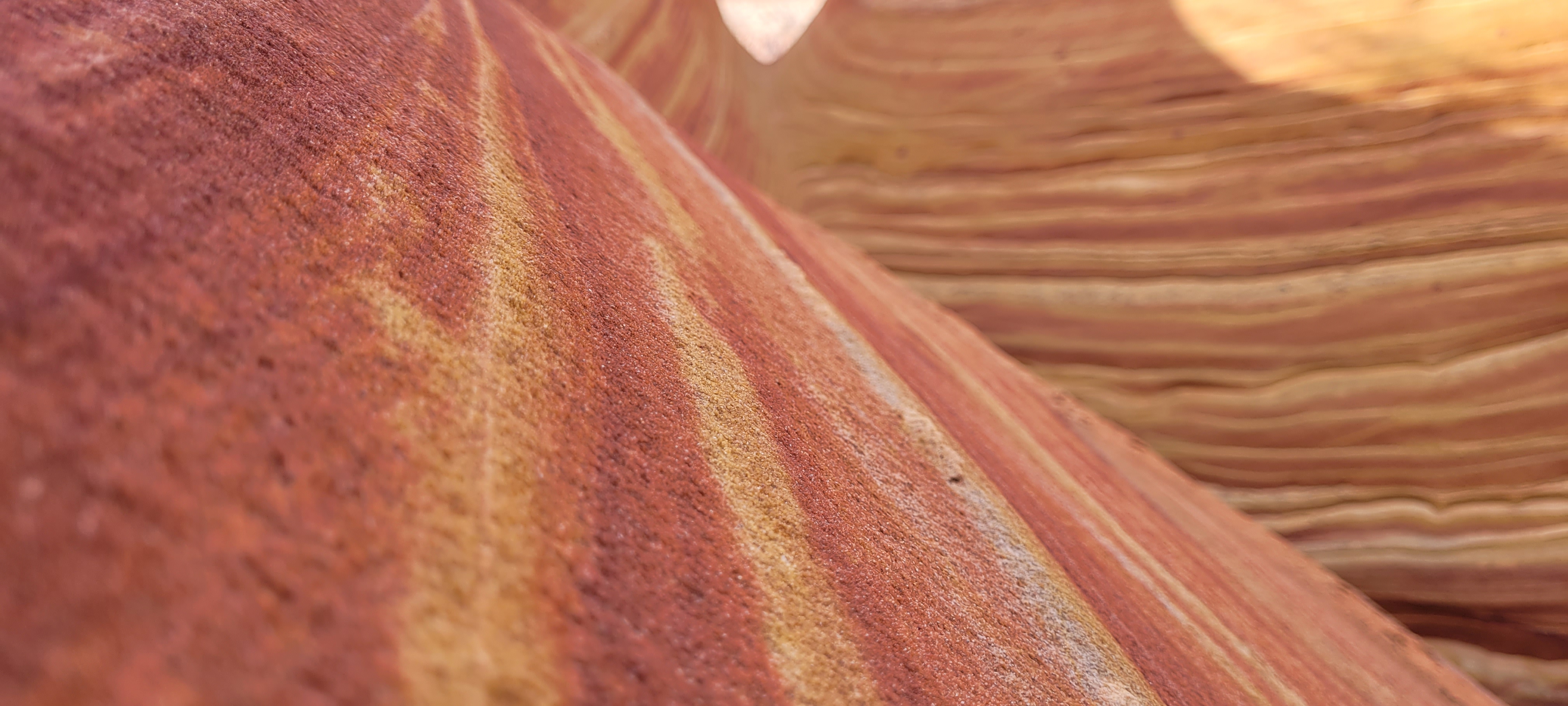
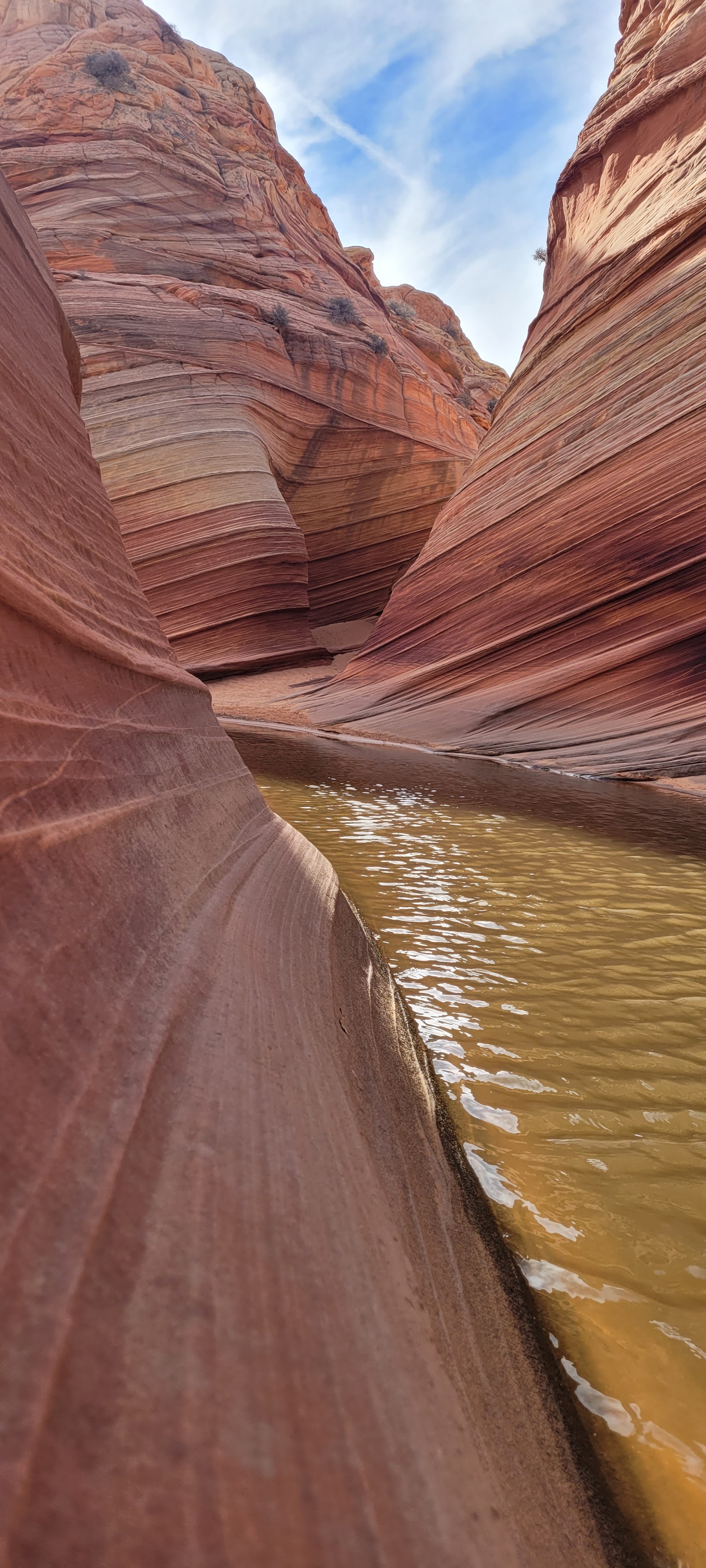
Exiting via Wire Pass Trailhead
To exit The Wave, we continued northward along the main trail most hikers use to ENTER the area, eventually making our way back to the Wire Pass Trailhead.
Experiencing both routes — the quieter Notch Arch approach and the standard Wire Pass return — gave us a well-rounded perspective on hiking The Wave in Arizona.
Essential Tips for Hiking The Wave in Arizona
If you’re planning this bucket-list hike:
- Start early
- Bring more water than you think you need
- Carry a physical map
- Download offline navigation
- Wear sturdy hiking shoes
- Bring plastic tips for your hiking poles
- Plan for 4–6 hours minimum
- Respect permit rules
The permit system exists to preserve this fragile landscape. Stay on durable surfaces and protect the sandstone so others can experience it, too.
Final Thoughts on The Wave Hike
After years of entering the lottery, hiking The Wave in Coyote Buttes North exceeded every expectation.
It wasn’t just about the destination. It was the winter air. The quiet desert. The alternative route. The bighorn sheep. The feeling of finally standing inside one of the most photographed rock formations in the world.
If you’re dreaming of The Wave hike in Arizona — keep applying.
When your moment comes, take your time. Explore the landscape. And consider taking the road less traveled.
 That Outdoor Site
Leave a comment