
Our Trail Rating
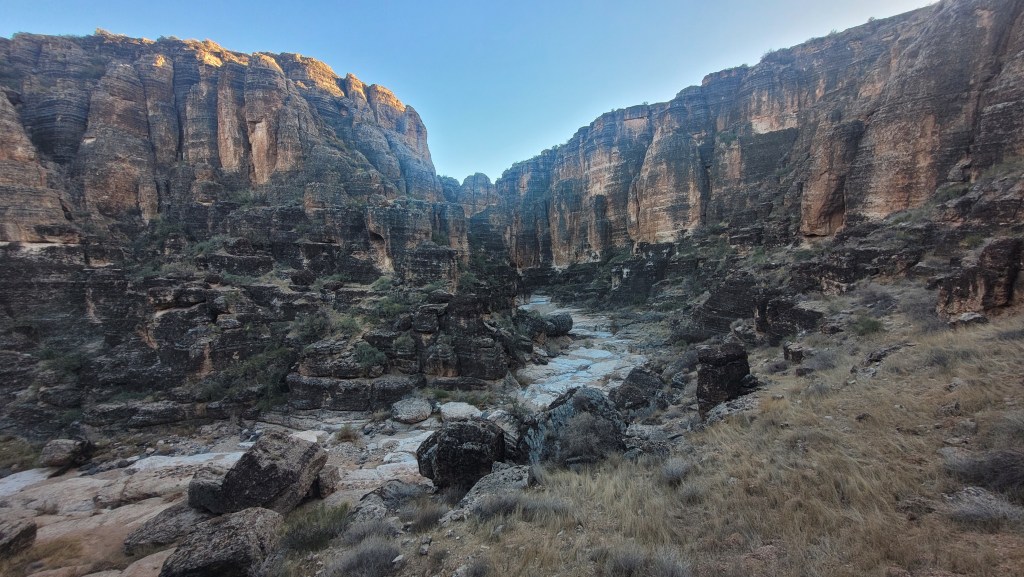
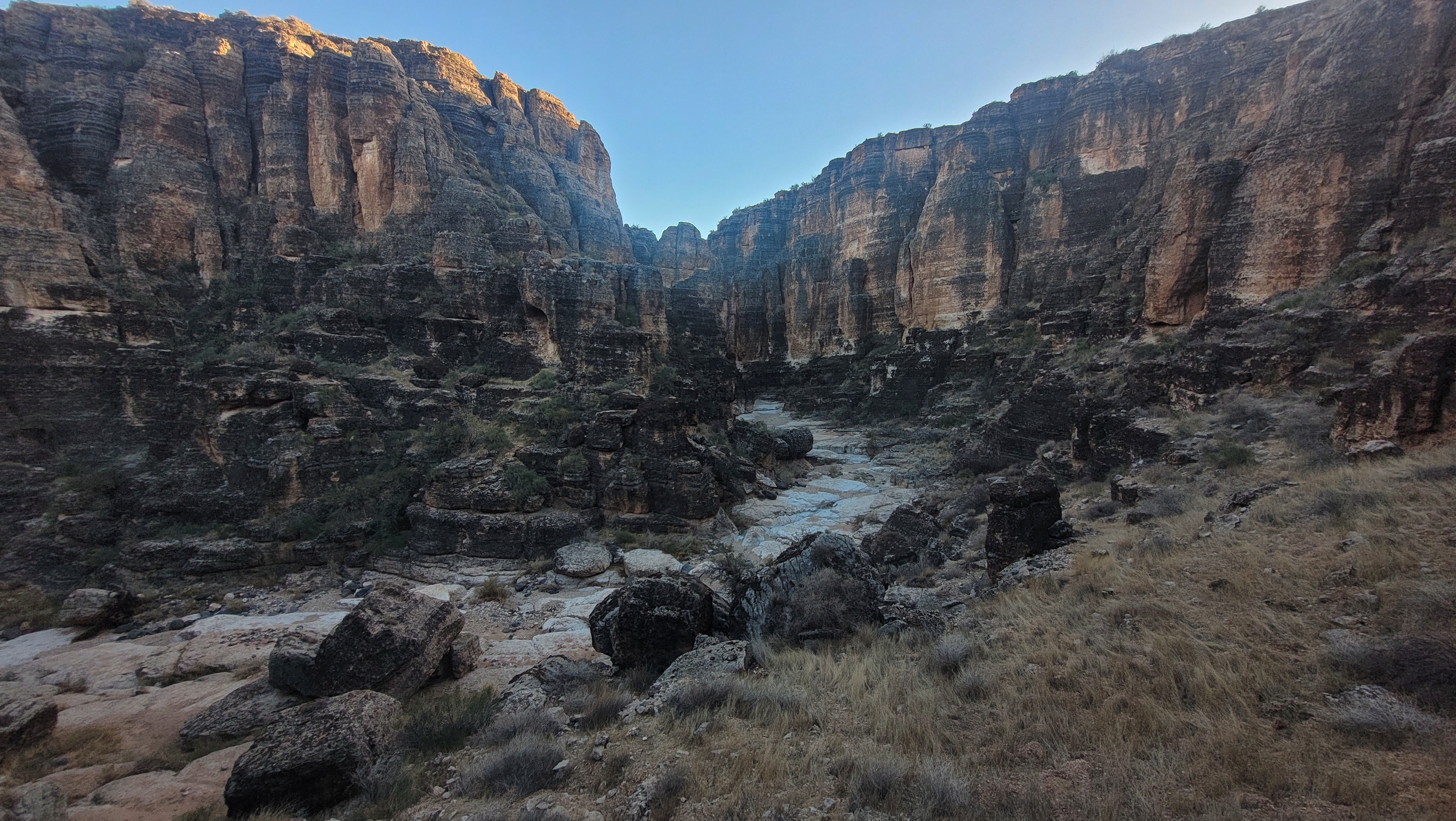
Not too far from the city boundaries of St. George is an interesting little slot canyon full of relics from ancient times. Really ancient. Fossil Canyon, also known as Quail Canyon, is a fascinating walk through sandy washes, massive boulders, and intricate impressions of living plants and animals from thousands of years ago.
Fossil Canyon is a short drive down County Highway 5 on what is called the Arizona Strip – that piece of land between the Utah state line and the Grand Canyon. From the end of River Rd. in St. George where it intersects with Southern Parkway at exit 2, head south on the dirt highway for about 7 miles. The trailhead begins at a turnout on the right (west) side of the road. It’s easy to miss, but you know you’ve found the place when you see the red dirt hill and a locked steel cable that blocks cars and trucks from traveling further down the dirt path.
From there, follow the dirt road until you reach two big metal water tanks and a collection of livestock holding pens. Slightly uphill from the water tanks you’ll notice a gate in the fence that takes you along the hillside. The footpath leads you to the wash, which eventually leads you into the mouth of the slot canyon.
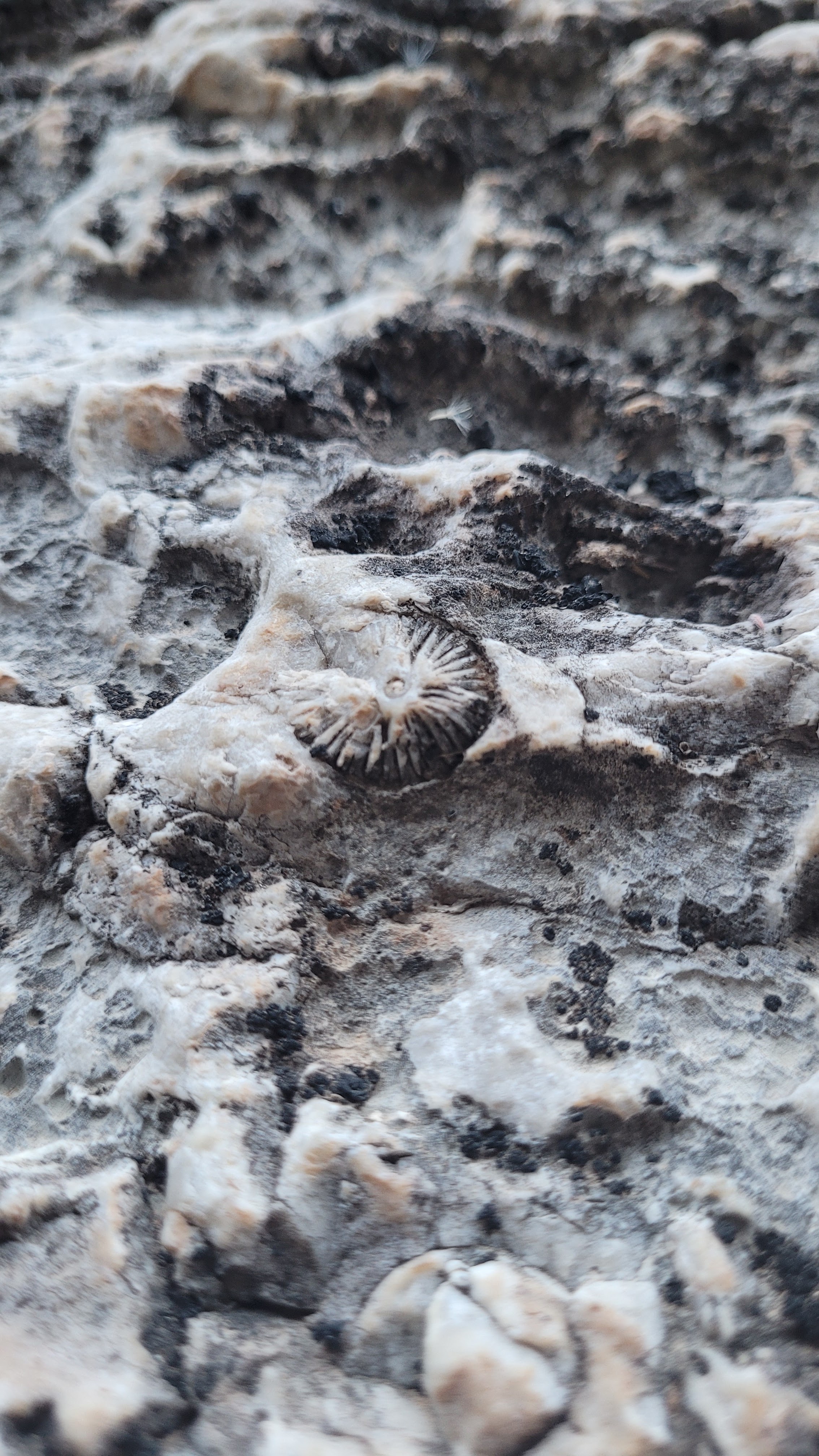
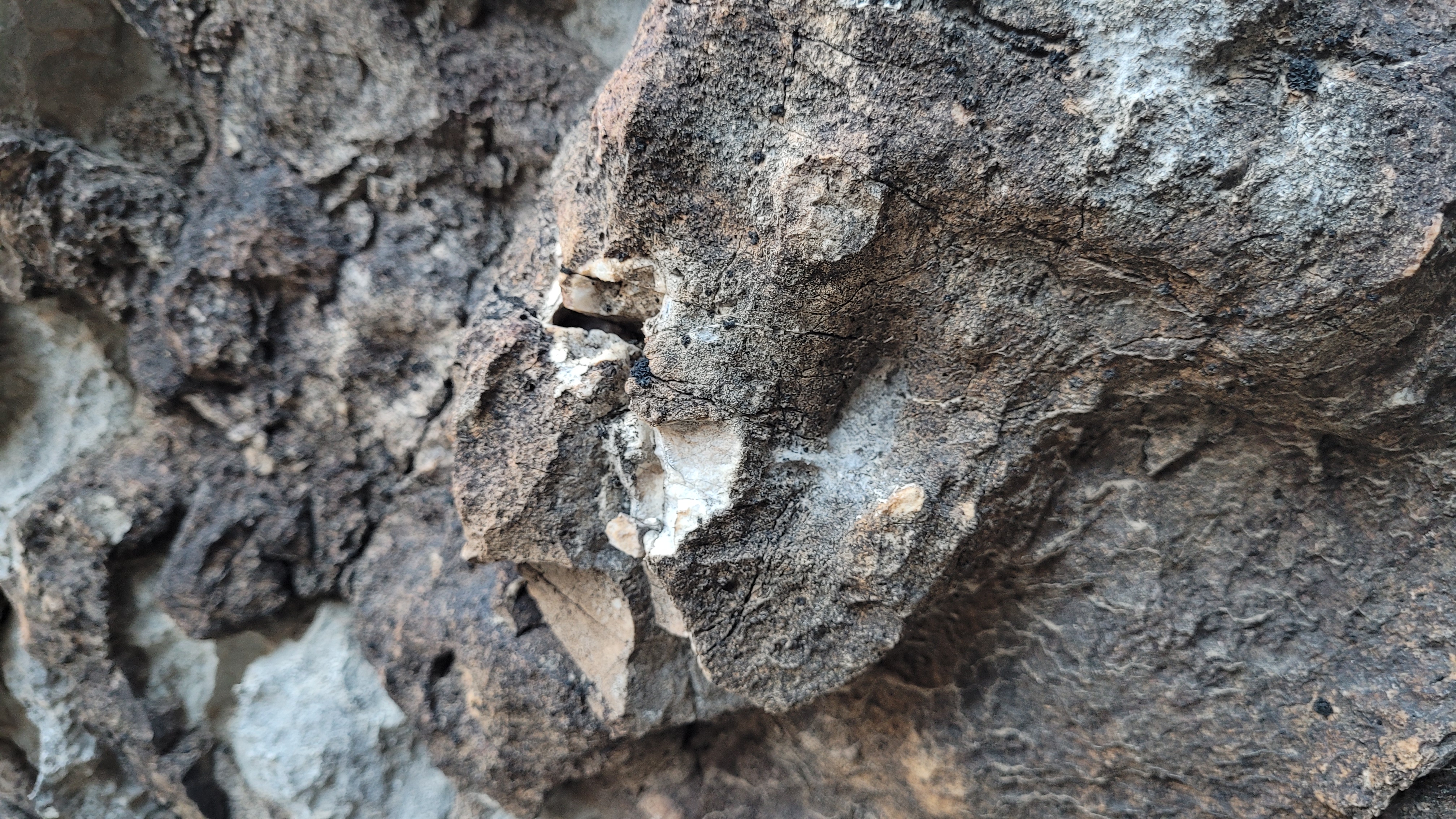
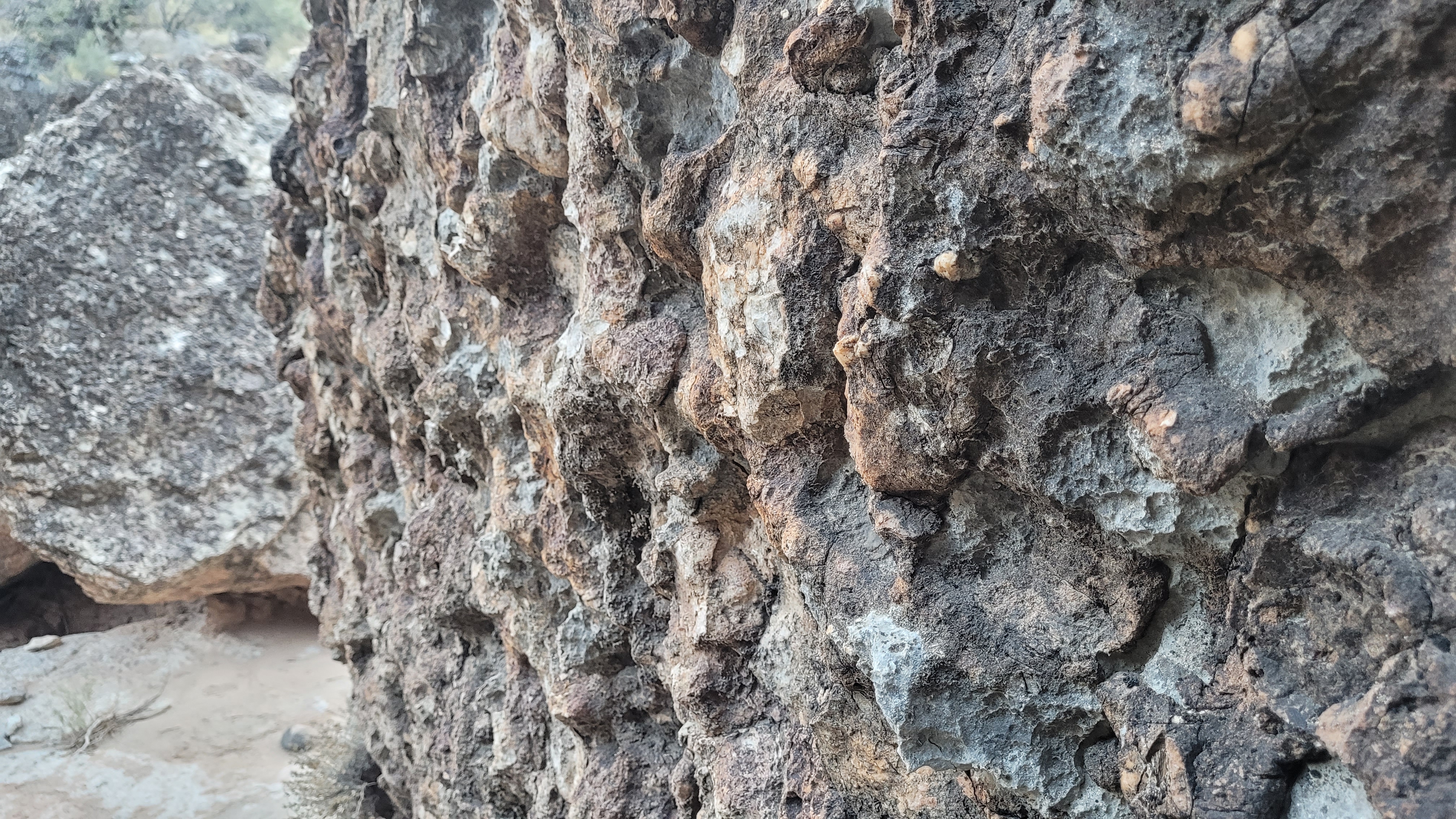
On our most recent trip to Fossil Canyon we took our time, less interested in reaching the end and recording our steps. Instead, we walked slowly, taking the time to notice the thousands of inclusions in the canyon walls. Once you know what you’re looking for, it’s hard NOT to find a fossil!
About The Arizona Strip
- 4,000 miles of unpaved roads
- Historical inhabitants include Ancestral Puebloans, Anasazi, Pauites, Spanish Explorers, and Mormon Pioneers
- Managed by the Bureau of Land Management
- Four National Monuments: Baaj Nwaavjo I’tah Kukveni – Ancestral Footprints of the Grand Canyon, Grand Canyon – Parashant, Pipe Spring, Vermillion Cliffs
- Largest populated towns are Colorado City and Fredonia (and technically Littlefield and Beaver Dam as well)
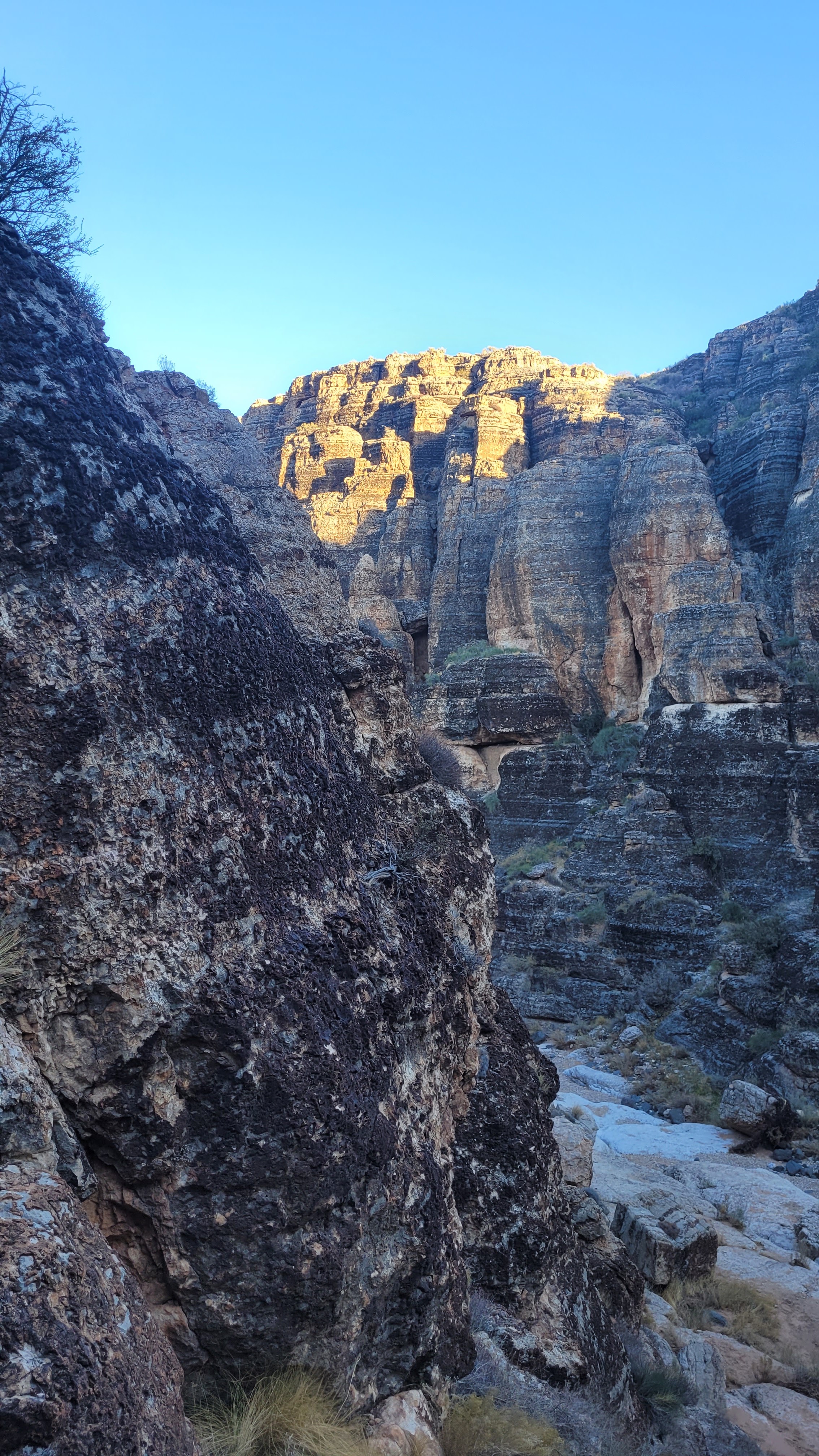
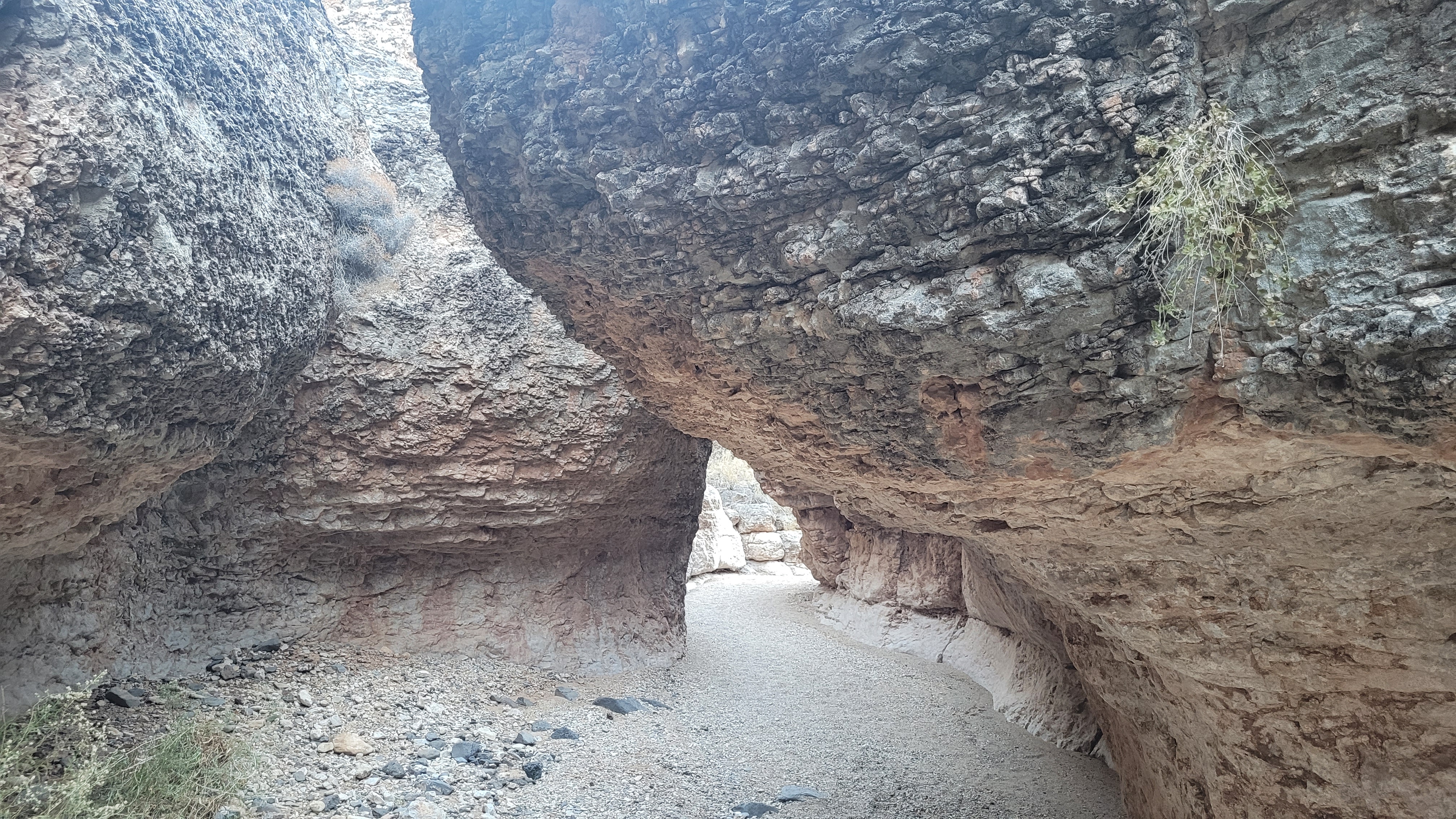
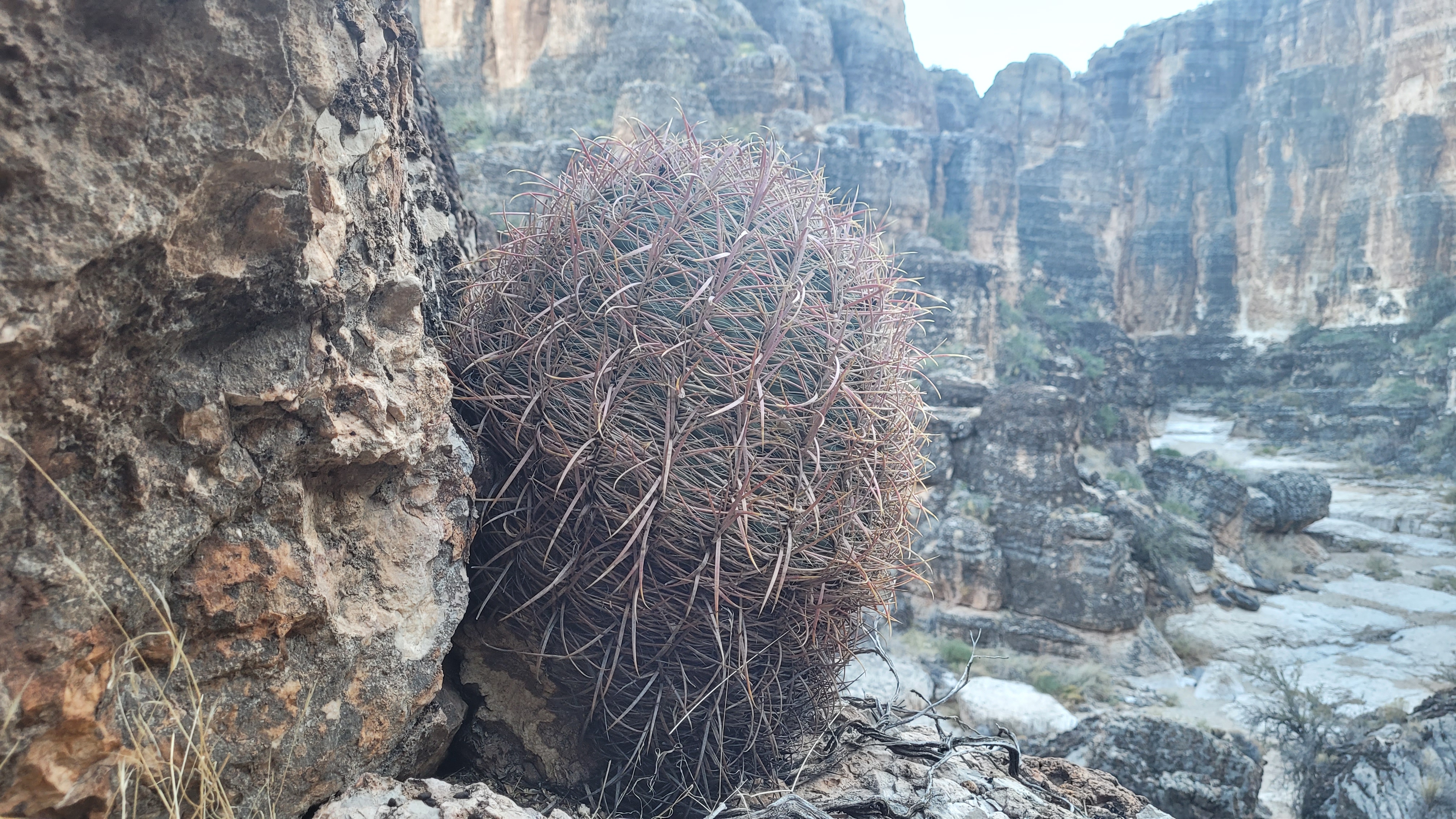
The floor of the canyon is a mixture of limestone slabs; soft, silty sands; and massive boulders. Towering walls on both sides offer a noticeable contrast to the blue sky skies overhead. The canyon is full of twists and turns. It’s obvious that powerful streams of water have undercut several sections of the wall on both sides. And if you visit Fossil Canyon after a rainstorm, you’re sure to potholes full of water – water teeming with all sorts of living things!
Fair warning: you’ll need to climb up and over the boulders in several places. While it’s true the hike is pretty family-friendly, it’d probably be challenging for small kids and pets.
At the end of the slot canyon is a wall that requires a small climb with the aid of a knotted handline. Once at the top, we inspected the bolts, and everything appeared to be safe and secure.
To get back to your vehicle you have two options. Either descend back down the handline and go back the way you came, or head further up the wash and exit the canyon at its head. If you choose the latter, you can follow the social trail back along the ridge of the canyon until you see the water towers at the trailhead. Once you see the tanks, follow the social trail to the bottom of the hill, and follow the trail back to the parking lot.
All in all, the hike is about three miles long. We went slow this time, so it took us about two-hours to complete.
One thing to note: it’s best to leave any fossils exactly where you find them. Only researchers who have a BLM permit are allowed to take fossils of vertebrates. As I understand it, anyone can take small amounts of invertebrate fossils for personal use. I tend to play it safe and leave what I find for someone else to enjoy.
Photos of Fossil Canyon


 That Outdoor Site
Leave a comment